Winston Peters Height, Weight, Net Worth, Age, Birthday, Wikipedia, Who, Instagram, Biography
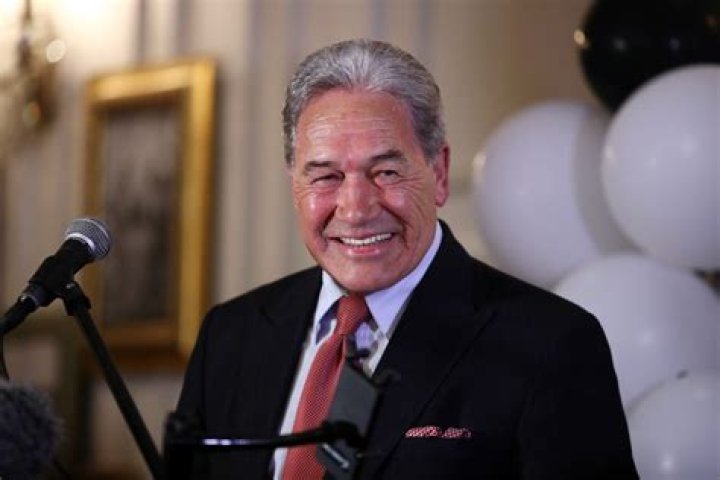
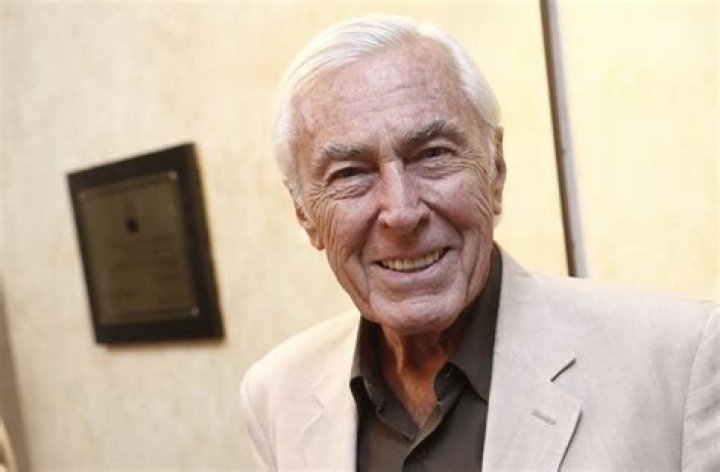
Winston Peters is a New Zealand lawmaker filling in as Head of New Zealand First since its establishment in 1993. Peters filled in as the thirteenth agent head of the state of New Zealand from 1996 to 1998 and 2017 to 2020, the pastor of International concerns from 2005 to 2008 and 2017 to 2020, and the financier of New Zealand from 1996 to 1998. He was an Individual from Parliament (MP) from 1979 to 1981, 1984 to 2008 and 2011 to 2020.
Peters originally served in the Bureau as Priest of Māori Undertakings when Jim Bolger drove the Public Party to triumph in 1990. He was excused from this post in 1991 in the wake of censuring his own Administration’s financial, monetary and unfamiliar possession approaches. He left the Public Party to frame the egalitarian party New Zealand First in 1993.
As the head of New Zealand First, he held the overall influence after the 1996 political decision and framed an alliance with the Public Party, getting the places of Delegate Top state leader and Financier — the last option position made for Peters. Be that as it may, the alliance broke up in 1998 following the substitution of Bolger by Jenny Shipley as Top state leader. In 1999, New Zealand Previously got back to the resistance prior to entering government with Work Party State head Helen Clark, in which Peters filled in as Pastor of International concerns from 2005 to 2008.
| Name | Winston Peters |
| Net Worth | $30 million |
| Profession | Politician |
| Height | 1.83m |
| Age | 76 years |
— Winston Peters (@winstonpeters) May 16, 2023
In the 2008 general political decision, after a subsidizing embarrassment including Peters and his party, New Zealand Originally neglected to arrive at the 5% limit. Thus, neither Peters nor New Zealand Previously was gotten back to Parliament. In any case, in the 2011 general political race, New Zealand Previously encountered a resurgence in help, winning 6.8% of the party vote to get eight seats in Parliament. In the 2014 general political race, NZ Previously acquired 11 seats and got done with 8.66%.
Winston Peters lost his electorate seat in Northland yet NZ Originally won 9 seats in general in the 2017 political race, with 7.2% of the party vote. Following the political race, NZ First again held the overall influence and framed an alliance government with the Work Party. Head of the state Jacinda Ardern accordingly delegated Peters as Appointee Prime Endlessly clergyman of International concerns. Peters was Acting Head of the state from 21 June 2018 to 2 August 2018 while Ardern was on maternity leave. In the 2020 political race, NZ Previously neglected to arrive at the 5% edge and again left Parliament, with Peters leaving the public authority.
On 21 May 1998, Peters was delegated to the Privy Chamber and acquired the style of “The Right Good”. In 2007, Peters was gave with the mainly Samoan title Vaovasamanaia, signifying “lovely, attractive, amazing, pleased and upbeat.”
Winston Raymond Peters PC was born on April 11, 1945 (age 76 years) in the Northland city of Whangārei, New Zealand Peters’ introduction to the world endorsement keeps his introduction to the world in Whangarei and his enrollment as Wynston Raymond Peters. His dad is of Māori plunge and his mom has Scottish heritage. His iwi alliance is Ngāti Wai and his family is MacInnes. Two of his brothers, Ian Peters and Jim Peters, have likewise filled in as MPs, and another brother, Ron, has likewise remained as a New Zealand First up-and-comer. As indicated by the writer Ian Wishart, Peters had little openness to the Māori language and culture during his young life years because of overwhelming osmosis arrangements that empowered coordination into Pākehā (New Zealand European) culture.
Well referred to just as “Winston”, Peters has had a long and violent political vocation since first entering Parliament following the Public Party win of the 1978 general political decision. All through his vocation, he has called for more engaged and prohibitive migration arrangements. He has upheld benefits for senior residents, condemned the media and “elitism”, and has leaned toward socially moderate strategies.
He experienced childhood with a homestead in Whananaki, and subsequent to going to Whangarei Young men’s Secondary School and Dargaville Secondary School, Peters studied at the Auckland Educators’ Trade school. In 1966 he educated at Te Atatū Transitional School in Auckland however the following year went to Australia where he turned into an impact heater specialist with BHP in Newcastle and later a tunneler in the Cold Mountains.
In 1970 Peters got back to New Zealand and studied history, legislative issues and regulation at the College of Auckland. During his college years, Peters joined the New Zealand Youthful Nationals, the adolescent wing of the middle right New Zealand Public Party, and got more familiar with Bruce Cliffe and Paul East, who later filled in as Bureau priests in the Fourth Public Government. Like his brothers Ron, Wayne, and Allan, Peters played rugby. He was an individual from the College Rugby Club in Auckland and commander of the Auckland Māori Rugby crew. In 1973, Peters graduated with a BA and LLB. He wedded his accomplice Louise and later functioned as a legal counselor at Russell McVeagh somewhere in the range of 1974 and 1978.
Well referred to just as “Winston”, Peters has had a long and tempestuous political vocation since first entering Parliament following the Public Party win of the 1978 general political race. All through his vocation, he has called for more engaged and prohibitive movement arrangements. He has upheld benefits for senior residents, censured the media and “elitism”, and has leaned toward socially moderate approaches.
Winston Peters entered public governmental issues in the 1975 general political race, standing fruitlessly for the Public Party in the electorate seat of Northern Maori; he acquired 1,873 votes and turned into the main Public up-and-comer in a Māori seat for certain years who didn’t lose his store. This followed a fruitful mission by Peters and different individuals from his Ngati Wai iwi to hold their ancestral land despite the Work government’s arrangement to lay out beach front land saves for general society. Accordingly, the public authority of the day took basically no genealogical land in the Whangarei waterfront regions, and the drive roused the 1975 Land Walk drove by Whina Cooper.
Peters originally turned into an individual from parliament following the 1978 general political race, however solely after winning in the High Court an electing request which toppled the political race night result for the seat of Hunua (an electorate in the southern Auckland city region) against Malcolm Douglas, the brother of Roger Douglas. Peters sat down – a half year subsequent to surveying day – on 24 May 1979. He lost this seat in 1981, however in 1984 he effectively remained in the electorate of Tauranga.
On Police Ten 7 cancellation: The complaints from the criminal thug apologists is that there were ‘too many Maori and Pacific’ being shown on camera being arrested – and the media swallowed their ideological rage.
— Winston Peters (@winstonpeters) May 12, 2023
On 16 December 1986 Peters uncovered the Māori credit undertaking in Parliament; this elaborate the-then Māori Issues Division endeavoring to fund-raise wrongfully through a NZ$600 million advance bundle presented by the Hawaiian money manager Michael Gisondi and the West German financial specialist Max Raepple. Peters turned into the Public Party’s representative on Māori Undertakings, Buyer Issues, and Transport. In 1987 Jim Bolger raised him to Public’s Resistance front seat as the representative for Māori Undertakings, Work, and Race Relations. After Public won the 1990 political race, Peters became Pastor of Māori Undertakings in the fourth Public government, drove by Jim Bolger.
As Clergyman of Māori Undertakings, Peters co-created the Ka Awatea report in 1992 which pushed blending the Service of Māori Issues and the Iwi Change Organization into the current Te Puni Kōkiri (Service for Māori Advancement). Peters contradicted the Public Party initiative on various issues — like the Ruthanasia monetary arrangements — and often revolted against his party with respect to them. This procured him famous acknowledgment and backing. Nonetheless, his party associates doubted him, and his exposure looking for conduct made him progressively detested inside the party. While the party initiative endured contrasts of assessment from a backbencher, they were undeniably less ready to acknowledge public analysis from a Bureau serve, (not entirely set in stone) was sabotaging the public government. In October 1991, Bolger terminated Peters from Bureau.
Great to be here at the Fight for Life event in Auckland tonight.
The event is fundraising for Mike King’s I Am Hope charity with some really good suppprt.
Great cause, great crowd, great event.
— Winston Peters (@winstonpeters) April 27, 2023
Winston Peters stayed as a Public backbencher, proceeding to condemn the party freely. In late 1992, when the Public Party was thinking about potential possibility for the decisions in the next year, it moved to keep Peters from looking for renomination (under any standard). In Peters v Collinge, Peters effectively tested the party’s activities in the High Court, and in mid 1993, he decided to leave the party and from Parliament. This provoked a by-political decision in Tauranga a few months before the booked general political decision. Peters remained in Tauranga as an autonomous and won without any problem.
Right away before the 1993 political race, Peters laid out New Zealand First. He held his Tauranga seat in the political decision. Another New Zealand First applicant, Tau Henare, unseated the Work officeholder in Northern Maori, assisting with persuading individuals that New Zealand Originally was not just Peters’ own vehicle. Peters began the Winebox Request in 1994; which concerned organizations involving the Cook Islands as an expense shelter.
During the 1992 and 1993 constituent change mandates, Peters pushed the reception of the blended part relative (MMP) discretionary framework. In the 1996 general political decision, the MMP framework conveyed an enormous expansion in portrayal for New Zealand First. Rather than the 2 seats in the past parliament, the party won 17 seats and cleared all of the Māori electorates. All the more significantly, it held the overall influence in Parliament. Neither Public nor Work had sufficient help to administer alone. Neither party could shape a greater part without the sponsorship of New Zealand First, meaning Peters could really pick the following head of the state.Twitter account.