Sahra Noor Bio, Age, Family, Husband, Net Worth and Linkedin
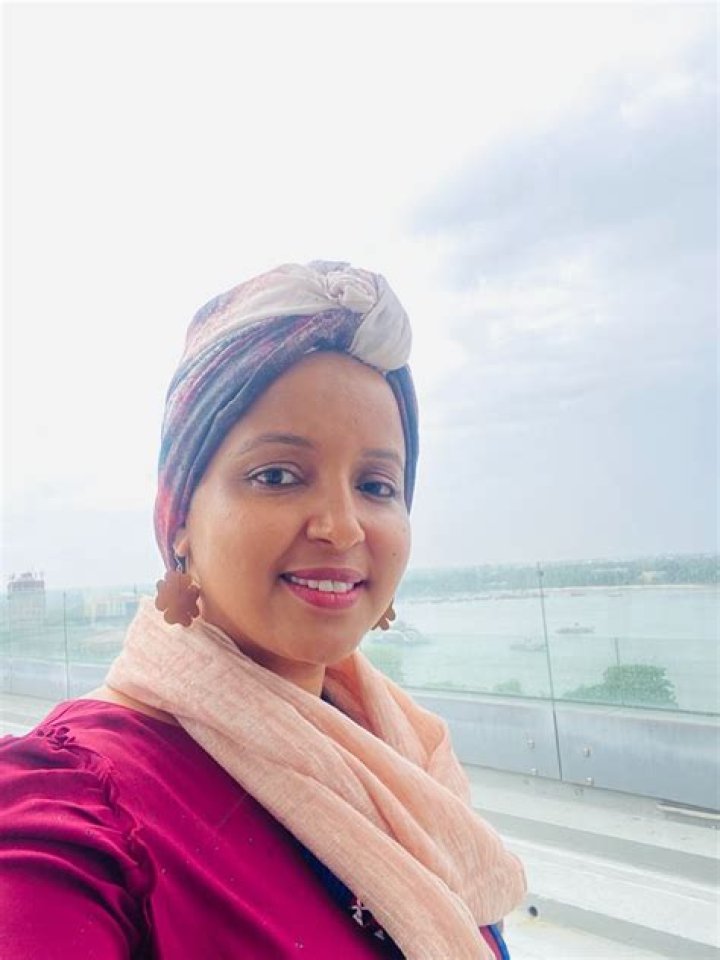
Table of Contents
Sahra Noor Biography
Sahra Noor ( Real name: Ilhan Omar) is a Somali American nurse and health care executive. She has more than fifteen years of experience in the health and medical field and she brings her refreshing,
bright spirit and sense of hope to her new role as CEO of People’s Center Health Services a community clinic with more than forty-five years. Experience providing culturally responsive primary care services to(communities who may not have access to mainstream healthcare).
Her story is the story of the clinic’s patients. As a leader, she brings a heightened level of inclusion in a way that can perhaps only be possible when the leader actually reflects the population the organization serves.
When most teenagers were starting high school, herself spent those years in a refugee camp during Somalia’s civil war.
Sahra Noor Age
Sahra Noor”Somali: Sahra Nuur, Arabic: زهرة نور” is a Somali-American nurse and health care executive. She was born in 1976 in Mogadishu, Somalia. Sahra Noor is 43 years old as of 2019.
Sahra Noor Family
Noor was born in Mogadishu, Somalia, but spent part of her childhood in Kenyan refugee camps. Sahra is the sister of politician Ilhan Omar, one of the first two Muslim women elected to the United States Congress.
In the camp, she witnessed a lack of healthcare as she battled malaria and developed a desire to enter the field of healthcare. She moved to the United States as a refugee at the age of eighteen.
Upon arriving, her family settled in Arlington, Virginia. She completed her high school career in two years at an alternative high school in Virginia. Noor attended St. Catherine University, where she received a nursing degree.
She would wake up at three in the morning to study before taking her daughter to daycare and then attending classes. She later attended the University of Minnesota and received a masters degree. She returned to Somalia to complete her primary research for her master’s thesis.
Sahra Noor Husband
The Somali American nurse and health care executive is married, but she has disclosed details of her husband in public. The couple together has two kids.
Sahra Noor Net Worth
Sahra Noor has more than fifteen years of experience in the health and medical field and currently brings her refreshing, bright spirit and sense of hope to her new role as CEO of People’s Center Health Services — a community clinic with more than forty-five years experience providing culturally responsive primary care services to communities who may not have access to mainstream healthcare.
Sahra’s story is the story of the clinic’s patients. Her estimated Net Worth as of 2019 is under review and will be updated soon.
Sahra Noor Linkedin
The nurse is a powerful, collaborative and innovative leader with demonstrated success in executive management roles in the healthcare and nonprofit sectors serving a different urban population.
It’s an experience that well prepared her for the popular role as a vital partner and leadership coach in global health and development in the Horn of Africa and beyond.
Her’s passion lies in population health and equity, and she has turned her enthusiasm into action by promoting research, strategies, and public policies to reduce the gaps in such areas as infant mortality, chronic disease, teen pregnancy, and women’s health.
her leadership is impactful. She is a visionary leader who also has a skill for getting things done. During her tenure, People’s Center was recognized as one of the 2018 Receiver of American Heart Association Target Blood Pressure Award.
In 2017, Minnesota Community Measurement recognized the People’s Center for culturally conscious programs for Somali children in their Health Equity of Care Report.
HRSA, an agency of the U.S Department of Health and Human Services also recognized People’s Center 3 years in a row for quality improvement by giving a total of $150,000 million in financial rewards.
Dr. Hashim Mohamud, Member Board of Directors, Secretary Board of Directors and Chairs CQI Committee of People’s Center and Clinics Services.
She is also a Clinical Pharmacist Abbott Northwestern Hospital, West Health Emergency Department and Urgent Care, part of Allina Health. 800 E 28th Street Minneapolis, MN 55407kills and Support.
Groups
Customer Resource Management
Federally Qualified Health Center (FQHC) Idea Exchange
Image for Healthcare Executive US Networking Group
Healthcare Executive US Networking Group
Image for 2016 HBS YALP ALUMNI
2016 HBS YALP ALUMNI
Image for Diversity and Cross-Cultural Professionals
Diversity and Cross-Cultural Professionals
Image for Behavioral Health Integration
Behavioral Health Integration
Tweets by Sahra_Noor
Sahra Noor People’s Center
Minneapolis, “MN November 2017” Indicating its development past primary medical care and into combined health clinics and wellness services and People’s it is now People’s Center Clinics and Services.
“We are making this change to provide clarity around who we are and what we offer to the community. We are excited about our new name, our new look, and growing health and wellness in our community,” said People’s Center CEO, Sahra Noor.
“It reflects that we are the network of community health clinics offering medical care, behavioral health, dental care, wellness services, and support services.”
Over its nearly fifty-year history, the services People’s Center has offered, and where they’ve’ been offered has expanded and become more integrated.
The organization’s purpose remains the same—to provide high-quality, affordable health care for patients of all national, ethnic and social-economic backgrounds. No one is turned away for their lack of ability to pay.
People’s Center Clinics and Services is made up of clinics in Family Medicine, Pediatrics, Behavioral Health, Dentistry, and Physical Therapy.
It will add an Optometry Clinic in the coming year. Services available to clinic patients include insurance navigation, interpreter, transportation, food and housing supports, granted aid, Employment, Counseling, Wellness services.
People’s Center offered an absolute rebranding process
led by HilgersWerner (its design partners and 144Design that considered the history and aspirations of its core constituents). The new name and brand elements “merge the cultural colors and designs within the community with symbols that frequently represent the health care industry, which together forms a single, powerful and memorable description of the brand ethos of People’s Center,” contends Randy Werner of HilgersWerner.
Sahra Noor MinneapolisThe Minnesota Super Bowl Host Committee Legacy Fund is a community advised of the Minnesota Community Foundation.
Working in partnership with the Minnesota Department of Health’s Statewide Health Improvement Program “SHIP” and based on the recommendations of SHIP’s community health boards, the Legacy Fund is providing 52 grants to 52 community projects across our state over one year leading up to Super Bowl LII.
The work of the Legacy Fund is made possible by Minnesota’s philanthropic community, including foundations, corporations, and individual donors who share our passion for improving the health and wellness of kids from every corner of our state.
Its goal is to build awareness of and invest in solutions for, a healthier generation of Minnesota kids across the state. Through its grantmaking and awareness initiatives, the Minnesota Super Bowl Host Committee’s Legacy Fund will leverage this single event into a lifetime of good health for the next generation of Minnesotans.
Sahra Noor Rise In Minnesota
The new generation of Somali women is on the rise in Minnesota
When Sahra Noor first visited People’s Center Health Services, she was a harried college freshman and the single mom of a toddler. She had arrived in the United States two years earlier after spending most of her teenage years in Kenyan refugee camps.
She returned to the center last summer as the chief executive of what is now a network of clinics headquartered in the Minneapolis’ Cedar-Riverside neighborhood.
In the 15 intervening years, Noor earned a graduate degree and rose rapidly in health care leadership. But she says she will draw heavily on her back story as a patient — at a time when the pressure is on for safety-net clinics to better track patient results and cut costs. The proud Somali community of Cedar-Riverside has high expectations of Noor, as well.
“I see myself as a cultural broker, someone who understands the American health care system and the needs of low-income and immigrant communities,” said Noor.
Over the past decade, a growing number of Somali-American women have launched successful professional careers. Now, some are aiming higher, eyeing new roles as decisionmakers.
On a recent morning at People’s Center, Noor stepped out of her uncluttered corner office for a twice-daily ritual. She strode briskly through the clinic’s ground floor, pausing to chat casually with patients in the waiting room and peeking into the new pediatric wing. A welcome sign in a dozen languages and a sign-up sheet for an immigration lawyer are posted on the pastel walls.
The ritual is an antidote to Noor’s biggest fear — that marooned in her office upstairs, she might lose touch with the front lines of patient care.
“We are dealing with people’s lives, and we need to think like a patient,” said Noor, who started in August.
The center opened in 1970 as an all-volunteer operation with limited hours. By the time Noor became a patient in 1998, it was a full-fledged community clinic.
It was among a growing number of providers that rely largely on publicly subsidized coverage such as Medicaid as well as state and federal grants but also aim to save taxpayer money by warding off costly emergency room visits and hospital stays.
Once Noor rushed in as her 2-year-old daughter cried in pain from an ear infection. The young mom had lapsed health insurance and no appointment. The nurse practitioner who treated her daughter gave the young family free medication and that ineffable “reassurance everything would be OK.”
Noor had arrived in the United States at age 18 and squeezed a high school career into two years at a Virginia alternative high school. In Minnesota, Noor and her daughter moved into a Cedar-Riverside high-rise apartment so Noor could attend nursing school at St. Catherine University.
Noor had wanted to work in health care since she experienced firsthand the shortage of care at Kenyan refugee camps. Months after her extended family arrived there, relieved to have survived the fighting back home, tragedy struck: A pregnant aunt died of a treatable illness while Noor battled malaria.
Those early experiences fueled Noor’s resolve when she arrived in Minneapolis. She juggled college, motherhood and a part-time job: in a nursing home, a call center and later as a medical assistant at Hennepin County Medical Center. All along, she says, “I felt I had
to be the best at everything I did. Being a single mom, I wanted to make sure I did not become a statistic.”
She got up at 3 a.m. to study before dropping off her daughter at daycare and heading to an 8 a.m. class. She was overwhelmed — and determined not to show it.
“She didn’t want anyone to cut her any slack,” said Noor’s sister, Ilhan Omar, now a Minneapolis City Council senior policy aide. “Her daughter was never going to be an obstacle or an excuse.”
After graduation, Noor worked as a nurse at Hennepin County Medical Center. Dr. Osman Harare, a Somali patient advocate at the time, remembers her explaining carefully how immunizations, insurance, and appointments work to patients. Noor remembers working with people on dialysis and with pacemakers, and yearning to be a leader who championed prevention.
Rising in leadership
From there, Noor’s career picked up speed. She got a job at the Community-University Health Care Center, a safety-net clinic in the Phillips neighborhood, as a health educator and later an assistant clinic manager. During that time, she also got a master’s in nursing and health systems administration at the University of Minnesota.
Next, she landed a management position spanning eight states with insurer UnitedHealth Group. Friends joked she had crossed over to the “dark side,” but as a supervisor of case managers for Medicaid beneficiaries, she saw herself as a patient advocate. Later, she took over the language services and community health department at Fairview Health Services, with a staff of interpreters who spoke 16 languages.
At the time, she launched the Health Commons in Cedar-Riverside, an innovative bid to bring health care to patients’ home turf. There, walk-ins could take wellness classes and get free consultations with volunteer physicians and nurses.
Cawo Abdi, a University of Minnesota sociology professor, says for years now Somali-American women have launched businesses and pursued professional careers, defying more circumscribed gender roles mothers and grandmothers might have hewed to in East Africa.
Now, Abdi predicts, more of them will rise to leadership positions, challenging an expectation — in the society at large and within the Somali community — that “women should not be too loud or too assertive.“Young Somali women are becoming much more visible,” Abdi said. “They are a part of the landscape now.”
Related Archive

Noorul Islam University Admit Card 2022 - 2023 |Online Download Hall Ticket

87 Best Bruce Lee Quotes of All Time to Trigger Personal Growth
Todd Hoffman Net Worth and Salary per Episode. Meet his Wife, Children, Family, Wiki