“It staggers me”: Netizens reacts as Roald Dahl’s books are edited to remove words deemed sensitive
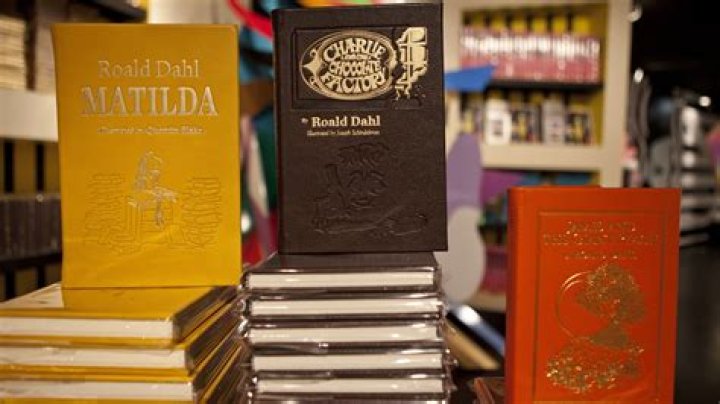
Puffin, a renowned distributing house from the UK, has been cleaning what they consider to be unfeeling and non-comprehensive words and terms from English writer Roald Dahl’s youngsters’ books. Generally speaking, the distributers are in any event, rewording Dahl’s words to make them all the more quite sensitive.
In any case, this matter has not been generally welcomed by many book sweethearts, particularly the people who grew up perusing Dahl’s famous kids’ accounts and books.
A Scottish blogger from the UK, Effie Dignitaries, communicated their discontent on Twitter and composed that it shocks them profoundly that distributers are controlling and changing Dahl’s books.
They contrasted the circumstance and when Thomas Bowdler altered William Shakespeare’s plays in 1807 to guarantee they were family-accommodating, because of which the action word “bowdlerize” came into utilization.
The Roald Dahl Story Organization and Puffin Books teamed up with Comprehensive Personalities, an organization that is resolved to guaranteeing consideration, fairness, variety, and openness exist in kids’ writing and is committed to carrying change to the substance of youngsters’ books.
The coordinated effort between the three organizations finished in a weakening of Dahl’s perky stories to be more comprehensive and OK of what they were thinking about contemporary culture.
In the most recent versions of Dahl’s books distributed by Puffin, references to the characters’ actual appearances were altered to make them more delicate and disinfected. Descriptors like “fat” and “revolting” were eradicated from new versions of his books. As indicated by reports, the distributers recruited “responsiveness perusers” to roll out the improvements.
One of Roald Dahl’s famous kids’ books, James and the Goliath Peach, written in 1961, had a line where the person Auntie Wipe was portrayed as “marvelously fat” as well as “massively heavy”. Another person, Auntie Spiker, was contrasted with a wire and bone for her slender and dry physical make-up.
Nonetheless, the descriptors, “fat”, “out of shape”, “slight”, and “dry” were eliminated from the new versions of the books. The whole refrain was changed as: “Auntie Wipe was a dreadful old savage/And should have been crushed by the organic product.”
Another person, Augustus Gloop from Charlie and the Chocolate Manufacturing plant, depicted as a pig in the book and in the film adaptions of the novel, is not generally presented as “fat”. All things considered, he is presently referred to youngsters as “gigantic”.
Also, in the book The Jokes, the personality of Mrs. Joke, whom the writer depicted in the first rendition of the book as “terrible and brutal”, presently has just a single modifier, “savage”.
Gendered references in Dahl’s books have additionally been debilitated with the goal that they don’t appear to be hostile to ladies or the transsexual or strange local area. In the clever The Witches, the part where it was said that witches are initially uncovered under their hairpieces, has now been given another disclaimer that says:
In Matilda, the tyrannical and savage headmistress, Miss Trunchbull, who was recently called the “most impressive female” in the book, is currently the “most imposing lady”.
The Oompa Loompas from Charlie and the Chocolate Plant, who were once called “little men”, are presently being acquainted with perusers as “little individuals”. In James and the Monster Peach, the Cloud-Men are currently Cloud-Individuals.
Netizens have communicated their dismay at Puffin for controlling and changing Roald Dahl’s credible composition after his demise.
The Roald Dahl Story Organization expressed that the occasional updates of a writer’s old books are standard in the present date. The organization additionally guaranteed that the drive planned to safeguard Dahl’s voice and style.
Nonetheless, Roald Dahl’s biographer, Matthew Dennison, recommended that Dahl’s books were composed for the creative and happy personalities of youngsters. Dennison foreshadowed that to make the narratives agreeable for perusers of any age, a few grown-ups can demolish the embodiment and fun of these accounts for the essential perusers these books were composed for, i.e., kids.