investigations
How to remove seborrheic keratosis
Written by Ava Bailey — 0 Views
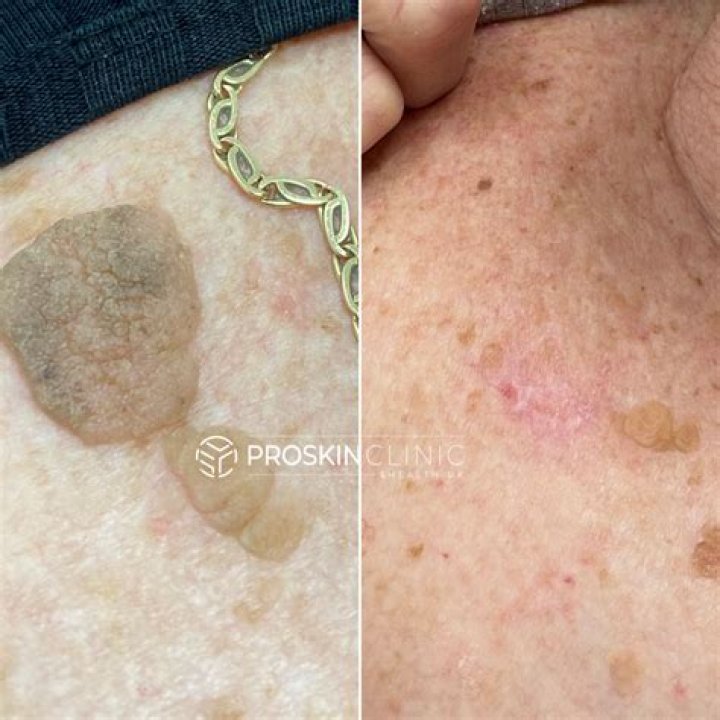
Can I remove seborrheic keratosis myself?
Don’t try to remove a seborrheic keratosis yourself. You may be wrong about the diagnosis. The growth may be something more serious. Removing the lesion at home may also cause an infection.How do you get rid of seborrheic keratosis at home?
There are no proven home remedies for seborrheic keratosis. Lemon juice or vinegar may cause irritation, possibly causing the lesion to dry and crumble, but there is no evidence that this is safe or effective.Is there an over the counter treatment for seborrheic keratosis?
The FDA has approved hydrogen peroxide 40% topical solution (Eskata – Aclaris Therapeutics) for treatment of raised seborrheic keratoses (SKs) in adults. It is the first medicine to be approved for this indication. (Hydrogen peroxide is available over the counter for topical use as a 3% solution.)What kills seborrheic keratosis?
Removal can be accomplished with freezing (cryosurgery), scraping (curettage), burning (electrocautery), lasers, or with acids.Is there a cream to remove seborrheic keratosis?
Topical treatment with tazarotene cream 0.1% applied twice daily for 16 weeks caused clinical improvement in seborrheic keratoses in 7 of 15 patients. In 2017, the US Food and medicine Administration (FDA) approved a concentrated hydrogen peroxide 40% solution (Eskata) for adults with raised seborrheic keratosis.Do seborrheic keratosis grow back after removal?
Most seborrheic keratoses don’t return after they’re removed. But a new one can still appear somewhere else on your body. Sometimes removing one can make your skin a little lighter at that spot. It usually blends in better over time, but not always.Can a seborrheic keratosis fall off?
Unlike moles, seborrheic keratoses grow on the surface of the skin, and because of this they are often loosely attached and at times can fall off, especially if traumatized. Many patients call seborrheic keratoses moles, but they are very different from common moles (melanocytic nevi).Can seborrheic keratosis spread?
Causes of seborrheic keratosisThe growths are not contagious and do not spread from contact with others. Some people notice that the growths tend to spread on their skin over time. The primary risk factor appears to be age.
How do you prevent seborrheic keratosis from spreading?
Can I Prevent Seborrheic Keratosis? There is no way to completely prevent the development of seborrheic keratoses. However, if you know you’re at risk or you frequently develop these growths, working with a dermatologist means you can limit the impact this skin condition has on your life.Does seborrheic keratosis grow fast?
Although they may be large and grow quickly, they are benign. They are not caused by sun damage so they can be found in areas that are also usually covered by clothing. Seborrheic keratosis tends to be genetic.Do seborrheic keratosis get bigger?
Seborrheic keratoses are very common on the back. They appear as waxy light tan, brown or black growths that look as if they were dripped onto the skin by a candle. Some can grow large, up to 1 inch (2.5 centimeters) across.What causes seborrheic keratoses?
Seborrheic keratoses are caused by a build-up of skin cells in your epidermis (the top layer of your skin), including cells called keratinocytes. Older cells typically get replaced by newer cells when they flake off. Sometimes the keratinocytes in this layer grow faster than normal, resulting in a keratosis.Can you pick off seborrheic dermatitis?
If your scalp is affected, a nonprescription antifungal shampoo may ease your symptoms. Try not to scratch or pick at the affected area, because if you irritate your skin or scratch it open, you increase your risk of infection.Related Archive

Tom Crean Height, Weight, Body Measurements, Shoe Size

Chris Tucker Height, Weight, Body Measurements, Shoe Size
Who is Dr Ruth Gottesman? Dr Ruth Gottesman Relationship Status, Who was Dr Ruth Gottesman Married to? - SarkariResult